New pronunciation and new information on Uranus
Welcome back Stargazers! July 13, 2026 Uranus ED
Hope everyone enjoyed the spectacular moon display over the 4th of July weekend.
We’re going to look into the wonders of Uranus this week. As the seventh planet from the Sun and the third largest by diameter in the Solar System, Uranus is a unique ice giant with a sideways rotation – an extreme axial tilt – faint rings and 28 known moons! It measures 31,763 miles across, roughly 4 times larger than Earth. Sunlight takes about 2 hours and 40 minutes to reach this planet. Uranus is classified as an ice giant because it’s made up of mostly water, ammonia, and methane in a dense gas phase, surrounded by a thick hydrogen-helium atmosphere.
Uranus has an extreme axial tilt of about 98 degrees – causing it to rotate almost on its side. This causes 42-year long seasons at each pole, during its 84-year orbit around the Sun; yet a full rotation takes roughly 17 hours and 14 minutes, giving Uranus a short day compared to its long orbit around the Sun. This unusual tilt is probably the result of a giant collision early in its history.
The atmosphere of Uranus is methane-rich, which absorbs red light and gives the planet its blue –green color. Its atmosphere is the coldest in the Solar System, with temperatures dropping to –224 degrees C. There are also extreme winds with speeds clocking at 560 miles per hour, and complex cloud patterns and seasonal variations are also evident on the Uranus surface.
Similar to other planets in our solar system, Uranus has 13 faint rings and 28 known moons, ranging from small irregular bodies to large icy moons such as Miranda, Ariel, Titania, and Oberon. Its rings are dark and narrow, with magnetically-charged particles producing the appearance of the rings and moons.
Uranus was discovered on March 13, 1781, by William Herschel using a telescope, making it the first planet discovered with this device. When it was initially discovered, Herschel thought it was a comet or star; however, it was determined to be a planet and named after the Greek god of the sky – Uranus. This giant planet has been visited by only one spacecraft – Voyager 2 in 1986 – leaving much of its surface and system still relatively unexplored.
As its nickname ‘the Ice Giant,’ implies, Uranus offers a unique opportunity as a natural laboratory to study the planet’s formations, atmospheric dynamics and the effects of its extreme tilt. Future explorations will focus on its moons, rings and magnetosphere. These studies will also aid scientists to a better understanding and offering valuable clues about planetary formation, extreme cold, sideways rotation, and the evolution of a planet.
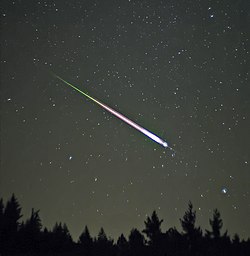
In late July, keep looking to the skies for the Delta Aquariids (named for their constellation, Aquarius) meteor showers and enjoy the wondrous show that the heavens keep sending us!
Happy Stargazing until next time.
Yours in the Stars,
Astrid